
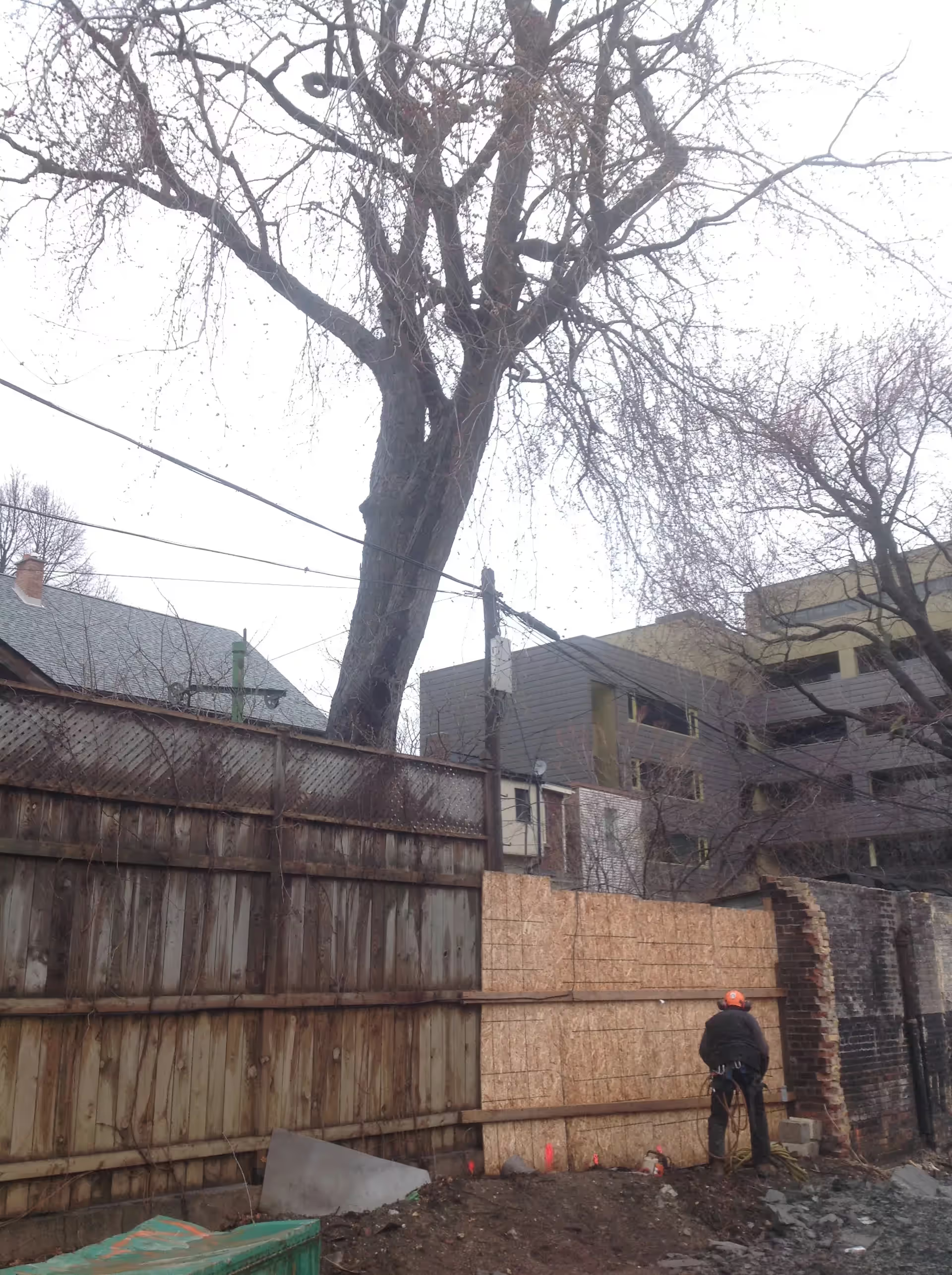
Nest Clearance
Nest Clearance Surveys
We check for active bird nests before tree removal or brush clearing. Next-day availability across the GTA.
Federal law bans disturbing a migratory bird nest that holds a live bird or a viable egg, and 18 Schedule 1 species have nests protected all year. ECCC puts GTA nesting at late March or early April to late August. Before you cut or clear in that window, we check the work area for active nests and give you a written finding. Where the habitat is too dense for a reliable search, we tell you to schedule the work outside that window instead.
Federal law protects active nests in any month
Under the federal Migratory Birds Convention Act, 1994 and the Migratory Birds Regulations, 2022, it is prohibited to damage, destroy, remove, or disturb a protected nest. For most species, protection applies when a nest contains a live migratory bird or viable egg. Schedule 1 nests receive additional year-round protection.
Environment and Climate Change Canada places the GTA in nesting zones C1 and C2. Their broad planning periods run from late March or early April through late August. Those are planning dates, not legal limits. A nest with a live bird or egg is protected whenever it occurs. Book the work outside that window when you can.
What a Nest Clearance Survey Includes
Project and Habitat Review
We define the disturbance area and review habitat, timing, access, proposed methods, and any permit or contract conditions before selecting the assessment approach.
Active-nest survey
Where the ECCC conditions are met, a skilled and experienced observer uses a method suited to the simple habitat and limited possible nest locations. The assessment looks for nesting activity, occupied nests, and viable eggs without relying on an intrusive blanket search.
Schedule 1 Species Screening
We check for Schedule 1 species that live in the GTA. GTA examples include Pileated Woodpecker, with a 36-month waiting period, and Great Blue Heron, with a 24-month waiting period.
Written Findings
We document the area reviewed, date, conditions, method, observations and next steps.
Project-Specific Timing
Federal law does not set a universal expiry period. Some project protocols require assessment within 48 hours of work, while others specify a different period. We follow the applicable documents and current site conditions.
Higher-risk period
Late March to late August
How It Works
Review the Project
Next-day availability
Share the site address, work area, planned methods, timing, and any permit or contract conditions. We confirm whether a visual survey is an appropriate part of the risk plan.
Assess the Work Area
Method matched to the site
Where ECCC conditions are met, a skilled and experienced observer uses an appropriate method in simple habitat with limited possible nest locations.
Document the Findings
Project-specific timing
We record the assessment scope, conditions, observations, and next steps. If a protected nest is present, work must avoid the affected area until the applicable restrictions are resolved.
What it costs
Surveys are priced per site visit. The main factors are:
- A single-tree residential removal is a smaller job than clearing a multi-acre development site, and large commercial projects are quoted to their tree count.
- Sites near known Pileated Woodpecker or Great Blue Heron habitat can need more documentation before work proceeds.
- Early-morning surveys timed to a crew's start, or same-day requests, can carry a premium.
- Municipality format requirements vary. Some municipalities accept a one-page clearance letter. Others want a set report format or an upload to their permit portal.
Get a quote
Share the address, the number of trees, and your planned work date, and we'll quote you directly.
Request a QuoteWho books a nest survey
Tree Removal Companies
When removal cannot avoid likely nesting activity or the project documents require a pre-work assessment.
Contractors & Developers
When a permit, contract, environmental plan, municipality, or conservation authority sets a documented pre-clearing condition.
Homeowners
When planned removal or heavy pruning could affect likely nesting habitat and the work cannot be rescheduled to reduce that risk.
Utility & Infrastructure Projects
When project specifications or environmental controls require documented pre-clearing observations in a defined work area.
Dense woodland and scrub need a different method
In dense woodland or scrub, a walk-through can miss nests and can disturb the birds. There we recommend doing the work outside late March to late August. A clear survey covers only the day it was done, since birds can start nesting after we leave. Schedule 1 nests stay protected even when empty, until the federal waiting period ends.
Schedule 1 Species: Year-Round Protection
Under the MBR 2022, 18 species have nests protected at all times, even when unoccupied. Species that occur in the GTA include:
Pileated Woodpecker
36 months unoccupied after registry notice
Great Blue Heron
24 months unoccupied after registry notice
Great Egret
24 months unoccupied after registry notice
Green Heron
24 months unoccupied after registry notice
Black-crowned Night Heron
24 months unoccupied after registry notice
Serving Toronto & the Greater Toronto Area
Nest Clearance Survey FAQ
When is an active-nest survey appropriate?
Book one when tree removal or brush clearing has to happen in nesting season, which ECCC puts at late March or early April to late August in the GTA, or when your permit, contract or environmental plan requires one.
What legislation protects migratory bird nests?
The federal Migratory Birds Convention Act, 1994 and the Migratory Birds Regulations, 2022 prohibit damaging, destroying, removing, or disturbing a protected nest. Most nests are protected when they contain a live migratory bird or viable egg. Nests of the 18 Schedule 1 species receive additional year-round protection. If a bird on Ontario's Protected Species list nests in the tree, the Species Conservation Act, 2025 also protects the bird and its nest, and the work needs a registration before it starts.
How long can survey findings be relied on?
Federal law does not set a universal expiry period for survey findings. Some permits and environmental plans impose a 48-hour timing requirement, while others use a different period. The governing project documents and changing site conditions determine when another assessment is needed.
What does the survey involve?
We first review the work area, habitat, timing, species likely to be present, and applicable project conditions. ECCC says an occupancy survey may be appropriate when skilled and experienced observers use a suitable method in simple habitat with few possible nesting locations or a small bird community. Dense woodland or complex scrub requires a different risk approach because an active nest search can miss nests and cause disturbance.
What are Schedule 1 species?
Under the Migratory Birds Regulations, 2022, 18 species have year-round nest protection, even when the nest is unoccupied. GTA examples include Pileated Woodpecker and Great Blue Heron. Their nests must remain unoccupied for 36 and 24 months respectively after notice is submitted through the federal Abandoned Nest Registry before removal.
What happens if a nest is found?
If an active nest is found, work must stop in that area immediately. A buffer zone is established around the nest, and work cannot resume near it until the young have naturally fledged and left the nest. We'll document the findings and advise on how to proceed. Work can continue in other areas of the site while the nest is active.
Is tree work automatically clear outside spring and summer?
No. Nesting periods vary by region, habitat, species and year. A nest containing a live bird or viable egg remains protected whenever it occurs, and Schedule 1 nests receive protection throughout the year.
What are the penalties for disturbing a nest?
Harming a protected nest, egg or bird without a permit carries a federal fine of $5,000 to $300,000 for an individual on a first summary conviction, or $15,000 to $1,000,000 on indictment. Jail of up to 6 months or 3 years is also possible. Corporations face $100,000 to $4,000,000 on a first summary conviction and $500,000 to $6,000,000 on indictment, with lower ranges for small revenue corporations. Repeat offences double the ranges. A violation can also stop work and delay a project.
How quickly can you schedule a survey?
We offer next-day availability across the Greater Toronto Area. We time the visit to your crew's start date.
What areas do you serve?
We serve the entire Greater Toronto Area including Toronto, Mississauga, Oakville, Markham, Vaughan, Richmond Hill, Brampton, Burlington, Hamilton, Pickering, Caledon, King, Durham Region, and York Region.
Contact us or call (647) 479-8778 with any other question.
Related Services
Tree Removal Reports
Municipal-ready arborist reports for tree removal permit applications across the GTA. Where a project also has a documented migratory-bird assessment condition, we coordinate the two scopes.
Learn More →Tree Protection & Fencing
Municipal-compliant tree protection fencing for construction sites.
Learn More →Construction Reports
Tree preservation and protection plans for construction and development projects.
Learn More →Get a quote
Tell us about your property. An ISA Certified Arborist will reply with a firm quote.
- Free consultation, response within 24 hours.
- Report delivered in 2 business days, written to your municipality's requirements.
- We do not sell tree removal.
Serving Toronto, the GTA and Southern Ontario.
ISA Certified Arborist · ISA Member · ISA Ontario Member